

Epoxy
Sproat Lake
Port Alberni, British Columbia, Canada
Also known as K'ak'awin, Port Alberni, Alberni Valley, Vancouver Island
The rock these carvings are cut into is known as the house of Kwatyat.
K'ak'awin is a panel of nine figures on a vertical rock face at the lake's edge, carved by ancestors of the Hupacasath people. The images read as marine creatures, though what they meant is not recorded and nobody claims to know. Kwatyat is the Nuu-chah-nulth Transformer, the figure who gave the living world and the landscape the shapes they now hold.
The site was among the first rock art in Canada to be written about, appearing in print in 1868 in a book by Gilbert Sproat, the man the lake is named after. He was a Justice of the Peace and an amateur ethnographer, and the title he published under has not aged well.
The carvings are fading. Water level changes and freeze and thaw have worn them shallower than they were in photographs taken in the 1970s. A floating dock now holds visitors back from the rock.
Details
- Feature
- Lake
- Build
- Epoxy
- Material
- Solid Walnut
- Colour
- Ocean Blue
- Size
- 10-1/2" x 16"
- Completed
- May 2025
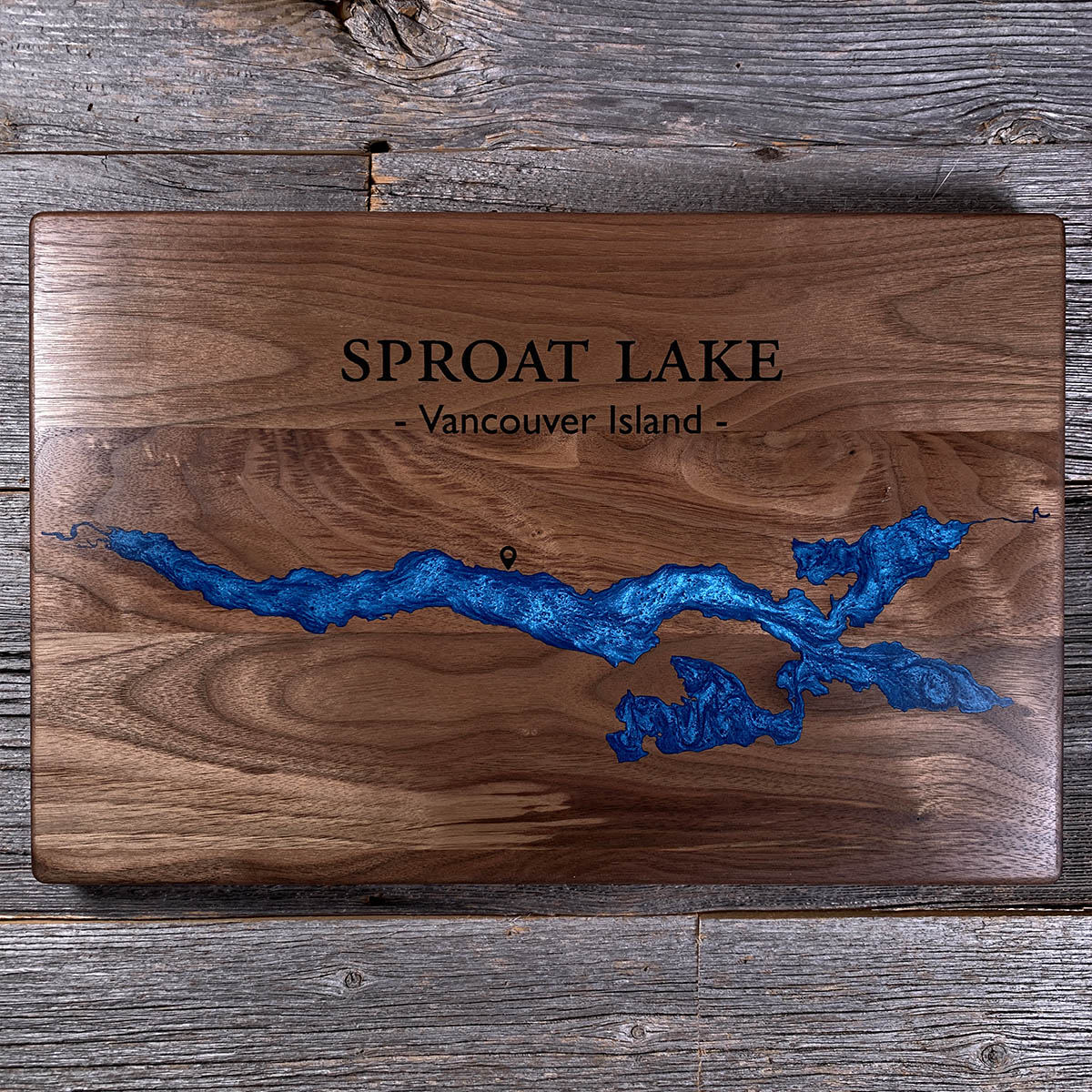
How this one was made
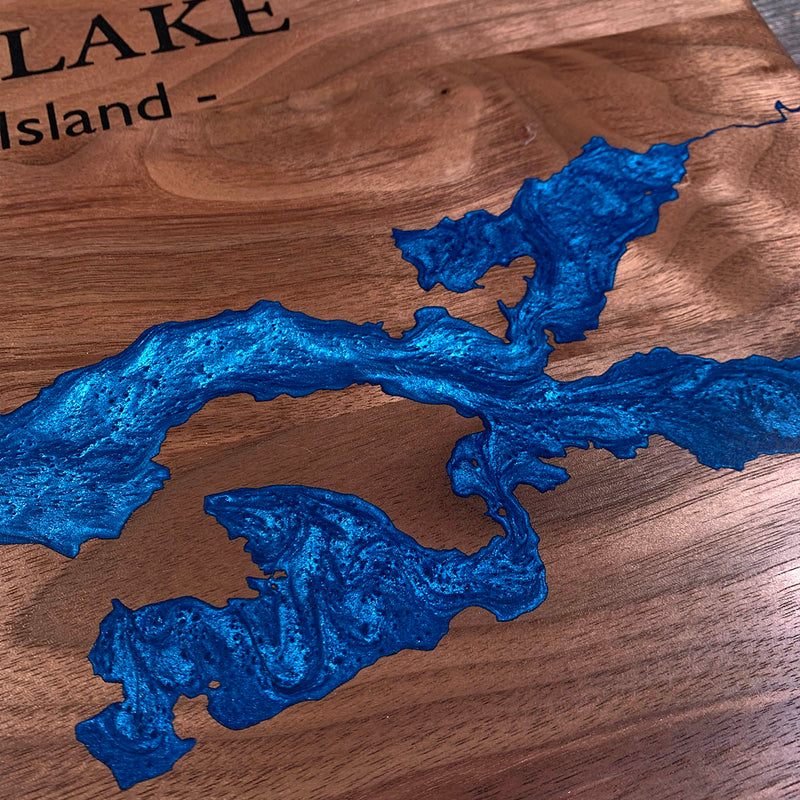
Walnut, inset, with the dam following the waterline about half an inch out.
Sproat Lake runs almost the full width of the board as a long horizontal body, which means the two dam lines track each other across the piece for most of its length with a narrow channel of epoxy between them. At the west end it thins to a thread finer than the dam holding it. At the east end it opens into three separate arms reaching off in different directions, and each of those gets dammed on both sides again.
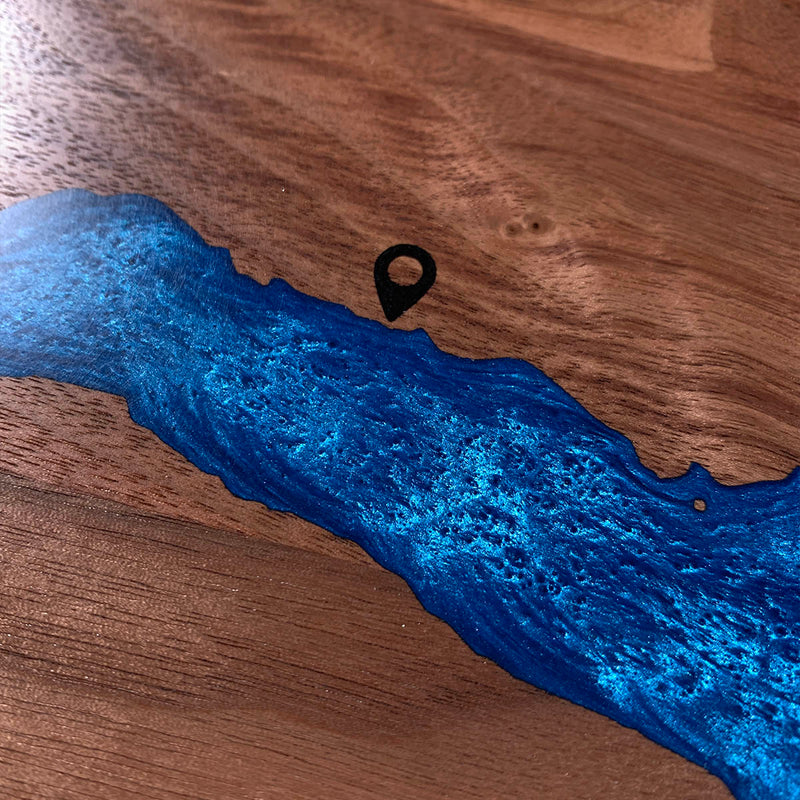
Two colours, the water and the black. The black does the lettering and the pin. The pin is a small shape with a point rather than a curve, so it goes in by syringe and the tip is the part that has to hold.
Walnut is the forgiving wood for a layout like this. A pour spread thin across a wide board has more chance to wander, and walnut is darker and tighter than maple, so staining is less of a worry if it does.
Waypoints close by
 Desolation SoundDesolation Sound, British Columbia, Canada
 Hurricane HillOlympic National Park, Washington, USA
 Island LakeShelton, Washington, USA
 Chilliwack RiverBritish Columbia, Canada
Also from our workshop
 Kodiak
From
Kodiak
From  Nomad
From
Nomad
From  Summit
From
Summit
From  Sanctuary
From
Sanctuary
From Where this is
49.272003159, -125.071125528