

Epoxy
Prince of Wales Island
Alaska, USA
Also known as Alexander Archipelago, Tongass
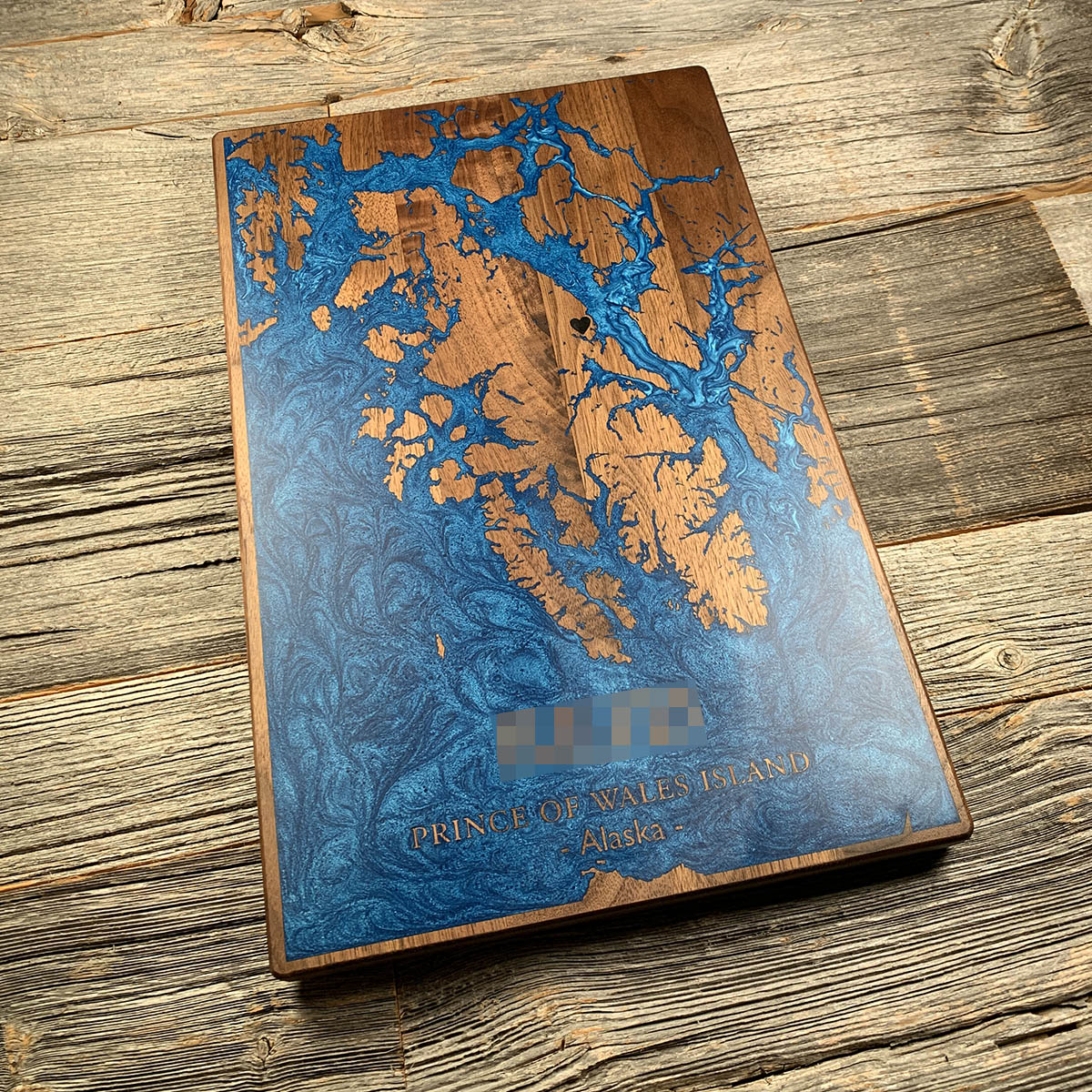
A young man lived on this coastline about ten thousand three hundred years ago and ate almost nothing but seafood. His descendants are still here.
His remains were found in 1996 in a limestone cave near the north end of the island, turned up by a Forest Service survey ahead of a timber sale. Tlingit elders gave him the name Shuká Káa, Man Ahead of Us. Isotope work on his teeth showed a diet drawn almost entirely from the sea, which on an island means boats, and boats that early changes the story of how people first moved down this continent.
In 2017 his genome was sequenced and set against ancient remains from the British Columbia coast and against people living in the region now. The line runs unbroken to the Tlingit, Haida, Tsimshian and Nisga'a. Ten thousand years of continuity on one stretch of coast, and the research that established it was done in partnership with the communities descended from him.
Details
- Feature
- Coastline
- Build
- Epoxy
- Material
- Solid Walnut
- Colour
- Ocean Blue
- Size
- 10-1/2" x 16"
- Completed
- December 2024
How this one was made
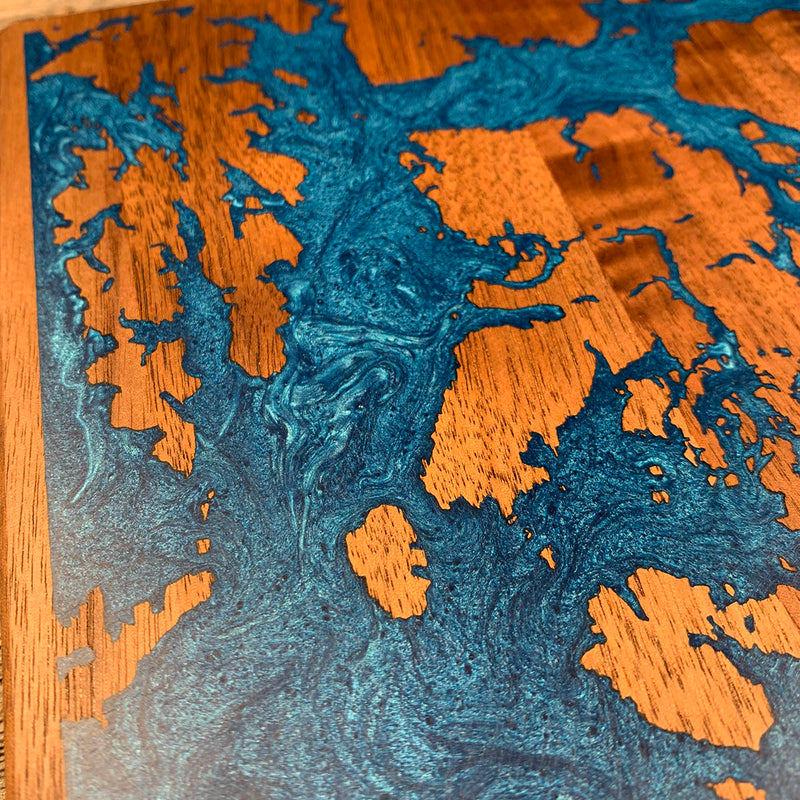
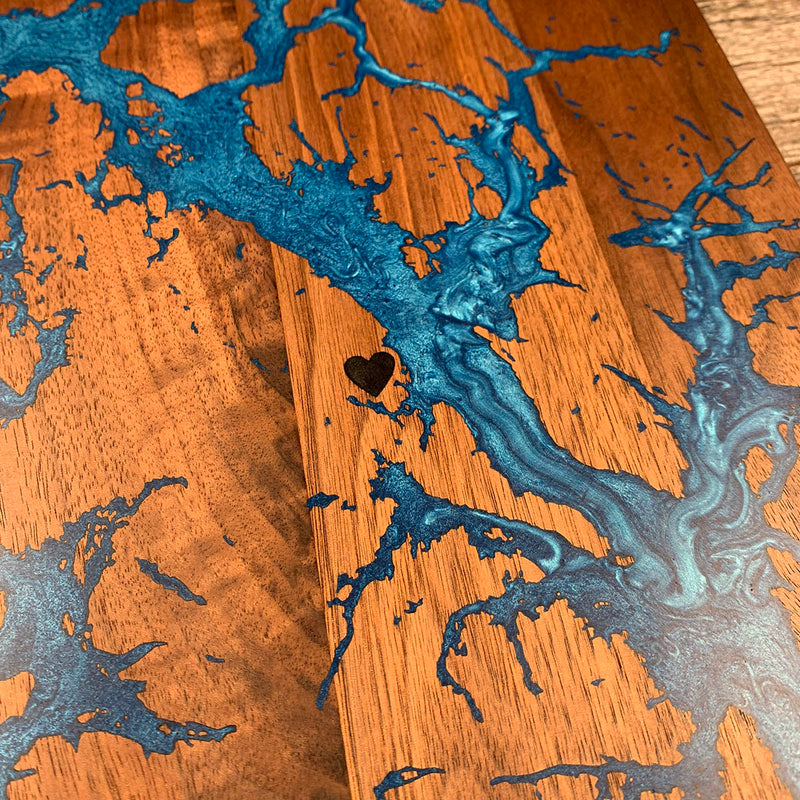
The pour runs off all four sides, so the whole perimeter is dammed before anything goes in. After that it is fine work almost without a break. This coast is inlets, passages and small islands the entire way round, and every one of them is a pocket where air can lodge with nowhere to escape. A board like this gets poured in stages and checked twice.
Marked on this piece
- Prince of Wales Island
- Alaska
Waypoints close by
 Desolation SoundDesolation Sound, British Columbia, Canada
 Hurricane HillOlympic National Park, Washington, USA
 Horsefly Lake (Lake Only)British Columbia, Canada
 Horsefly LakeBritish Columbia, Canada
Also from our workshop
 Cascade
From
Cascade
From  Sanctuary
From
Sanctuary
From  Peak
From
Peak
From  Silver Fox
From
Silver Fox
From Where this is
55.4407, -132.7669