

Epoxy
Oregon Coast
Lincoln County, Oregon, USA
Also known as Newport, Yaquina Bay, Central Oregon Coast, Lincoln County
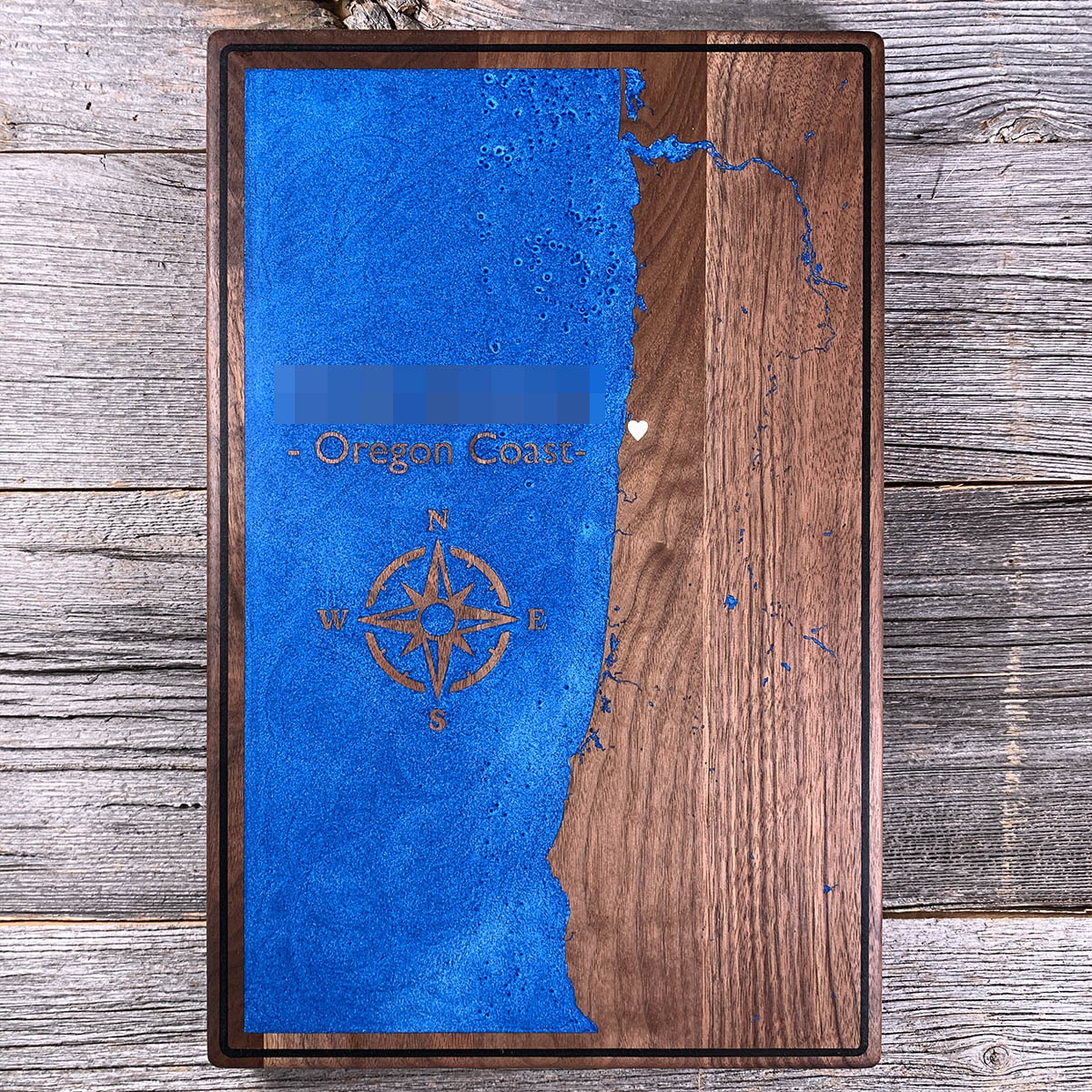
Every beach on this coast is public, and Oregon nearly lost that over a row about some driftwood.
In 1913 Governor Oswald West got the legislature to declare the ocean beaches a public highway from the Columbia River to the California line. Generations grew up assuming the whole beach was theirs. The wording only covered the wet sand.
In 1966 a motel owner in Cannon Beach worked that out. He dragged driftwood logs across the dry sand in front of his building, put out umbrellas and tables, and posted private property signs. He was within his rights, which was the problem. By then more than 110 miles of Oregon dry sand was privately held.
The fight over the fix deadlocked the legislature. In May 1967 Governor Tom McCall flew a helicopter load of oceanographers, surveyors and reporters onto the beach to establish where the line should sit, and was photographed glaring at the driftwood. The opposition folded. House Bill 1601 was signed that July and the public boundary now runs to the vegetation line.
Details
- Feature
- Coastline
- Build
- Epoxy
- Material
- Solid Walnut
- Colour
- Ocean Blue
- Size
- 10-1/2" x 16"
- Completed
- April 2025
How this one was made
Walnut, and inset rather than wall to wall, though the framing here is unusual. The ocean fills the left half and stops at a black border line that runs the full perimeter, so the dam follows the coastline down the middle of the board and the straight border on the other three sides.
Three colours. The blue ocean, the black border, and a white heart no bigger than a fingernail. Each is a separate pour and a separate cure, and the white one is small enough to be a syringe fill on its own.
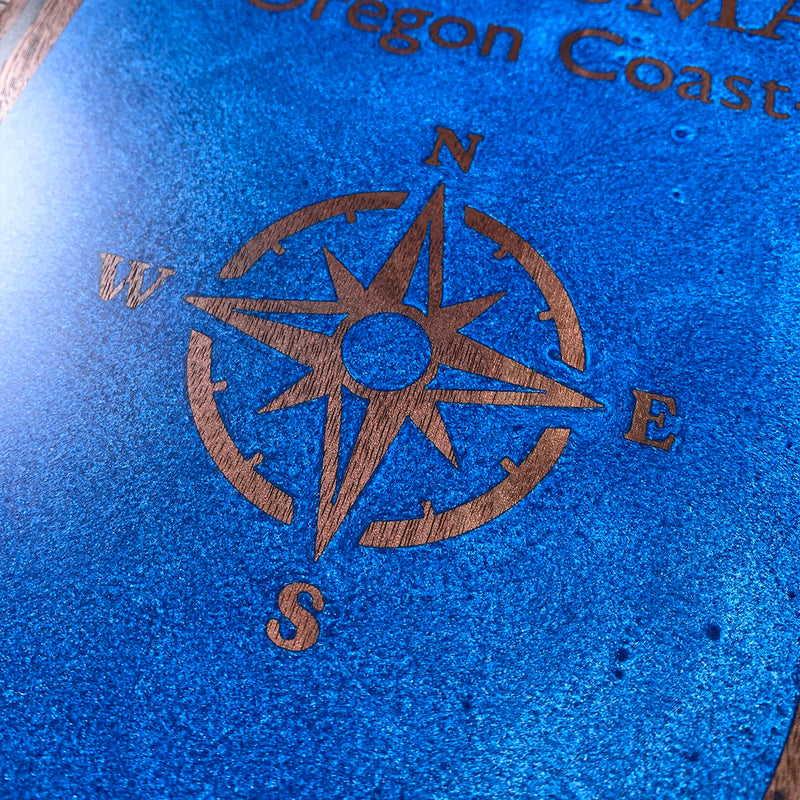
The compass rose and the words are handled the other way round. Neither is engraved. Both are left standing at the original surface inside the ocean cavity, so the flood goes over them and the sanding brings the tops back as bare walnut with blue all around. The rose is the harder of the two, because those points come down to a fine tip and a tip that chips has no fill to hide behind.
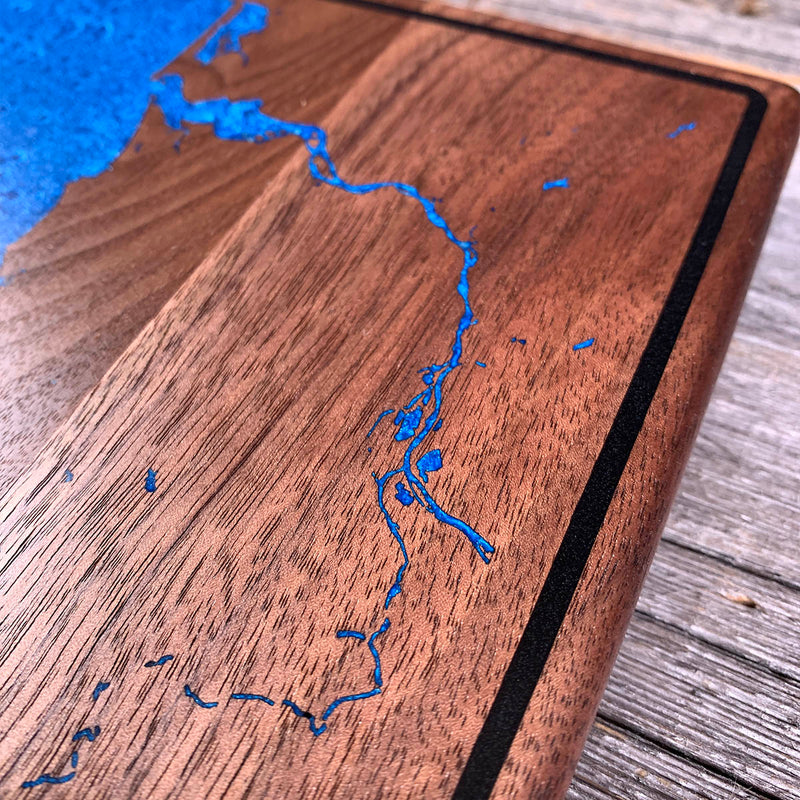
Then there is the river. It leaves the coast and runs inland across the bare wood, thinning to a channel narrower than the dam holding it and branching as it goes.
Waypoints close by
 ColtonClackamas County, Oregon, USA
 Island LakeShelton, Washington, USA
 Hurricane HillOlympic National Park, Washington, USA
 Chilliwack RiverBritish Columbia, Canada
Also from our workshop
 Seaside
From
Seaside
From  Cascade
From
Cascade
From  Sanctuary
From
Sanctuary
From  Peak
From
Peak
From Where this is
44.596338934, -124.074321264