

Epoxy
Bellevue
Talbot County, Maryland, USA
Also known as Tred Avon River, Oxford, Ferry Neck, Talbot County
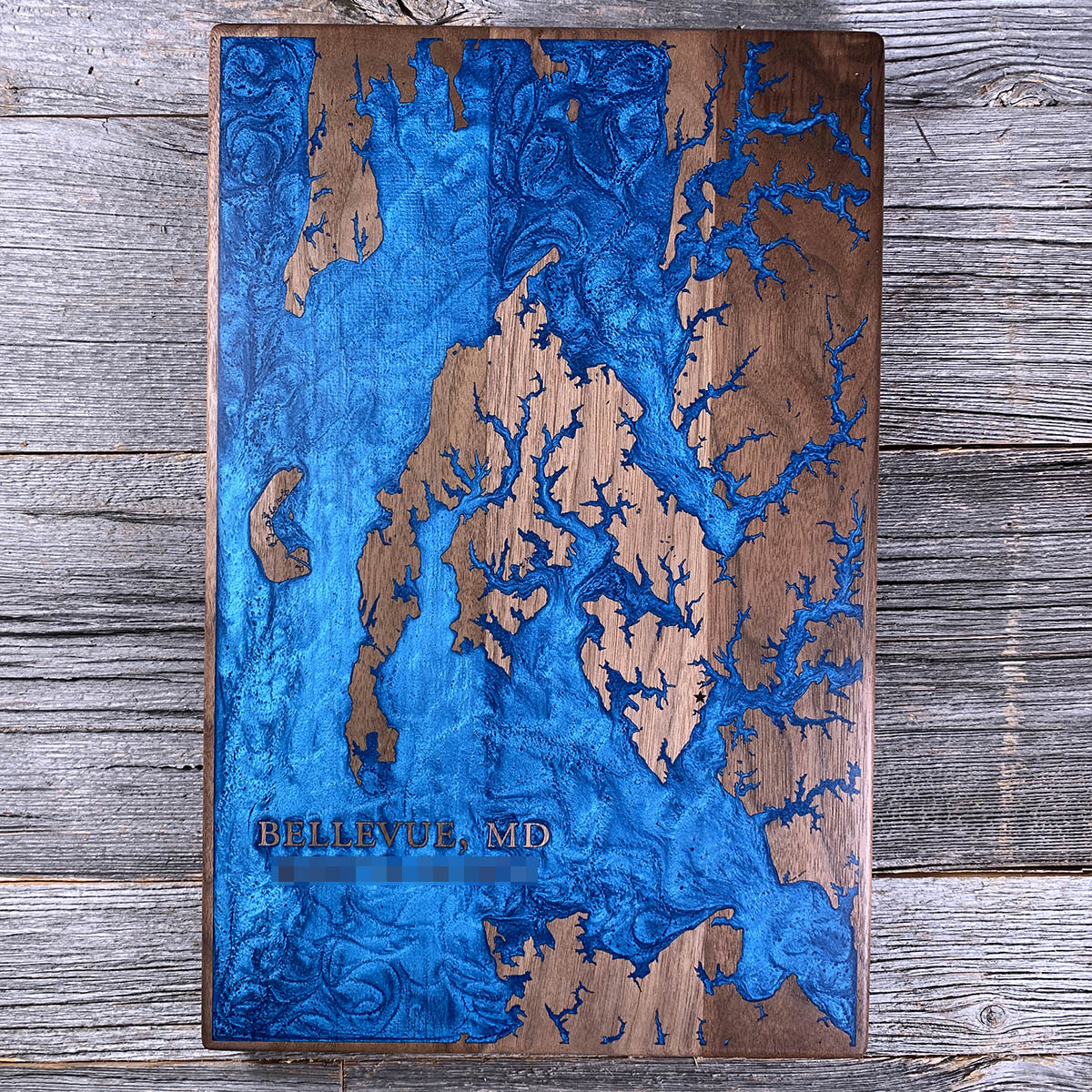
Bellevue was laid out as a town, complete with streets and a square, and none of it was ever built except the name.
Oswald Tilghman drew up the plan on Ferry Neck, at the point where the Tred Avon ferry landed, and named it Belleview for his wife. No city arose. The name stuck anyway, in a slightly different spelling.
The ferry is the older story. On 20 November 1683, two weeks after the Trade Act made Oxford a port town, the Talbot County Court pitcht upon Richard Royston to keep a ferry across the Tred Avon, paying him a subsidy of 2,500 pounds of tobacco a year. It is thought to be the oldest privately operated ferry service in the country, though it stopped for around sixty years after the Revolution and has run continuously only since 1836.
Sculls and sails moved it until 1886, when a steam tug took over towing wooden scows. The crossing is three quarters of a mile and takes about ten minutes.
Details
- Feature
- Coastline
- Build
- Epoxy
- Material
- Solid Walnut
- Colour
- Ocean Blue
- Size
- 10-1/2" x 16"
- Completed
- June 2025
How this one was made
Walnut, and wall to wall. The flood covers the whole face and runs off every edge before it comes back on the sander.
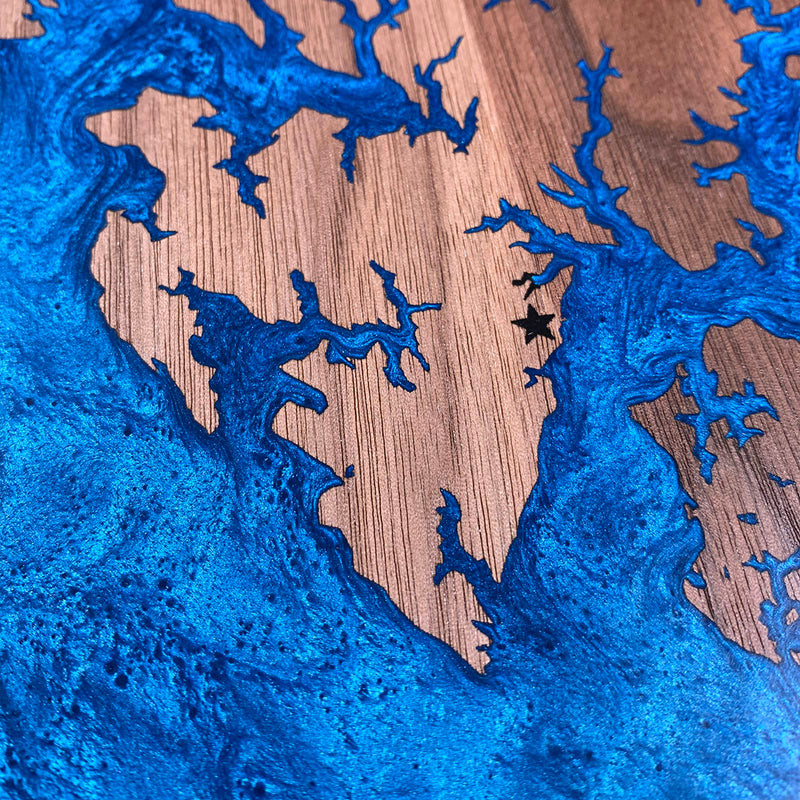
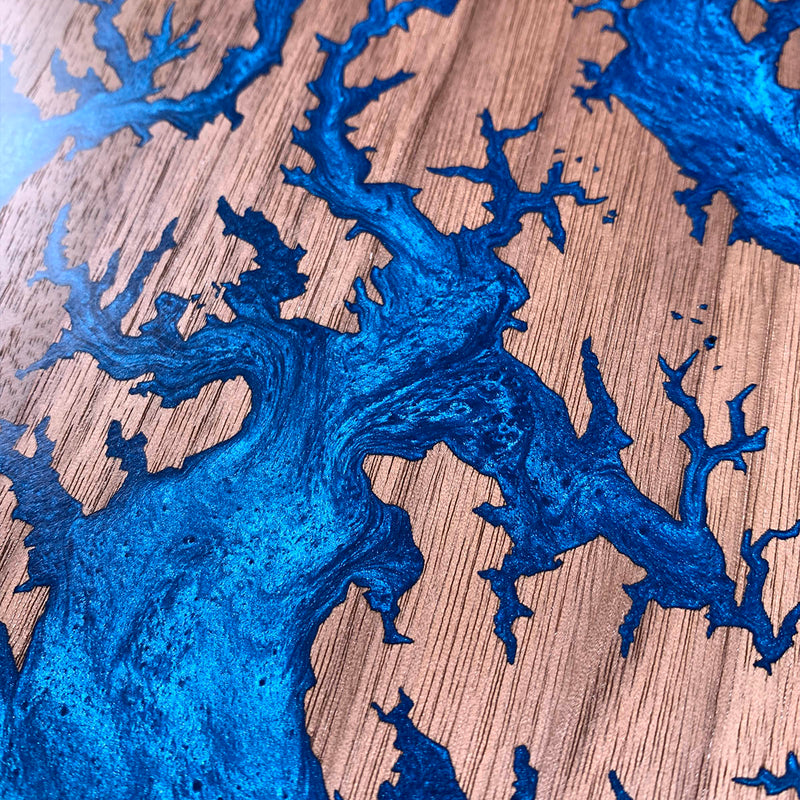
This is the most branched coastline in the batch. The Eastern Shore here is not a shoreline so much as a fractal, rivers opening into creeks opening into coves opening into ditches, and it keeps subdividing all the way down to the resolution of the engraving. The zoom shows it best. Some of those final branches are a fraction of a millimetre wide and still have dam on both sides.
One colour, the water. BELLEVUE, MD is the negative, left standing at the original surface inside the poured area so the sanding brings the tops back as bare walnut.
A board like this is where wall to wall earns its place. With this much water and this little land, damming the perimeter separately would add length for no gain.
Waypoints close by
 Bethany BeachBethany Beach, Delaware, USA
 Cos Cob HarborGreenwich, Connecticut, USA
 Candlewood LakeDanbury, Connecticut, USA
 Groton Long PointNew London County, Connecticut, USA
Also from our workshop
 Sanctuary
From
Sanctuary
From  Peak
From
Peak
From  Silver Fox
From
Silver Fox
From  Tree of Life
From
Tree of Life
From Where this is
38.763484412, -76.281307155