

Epoxy
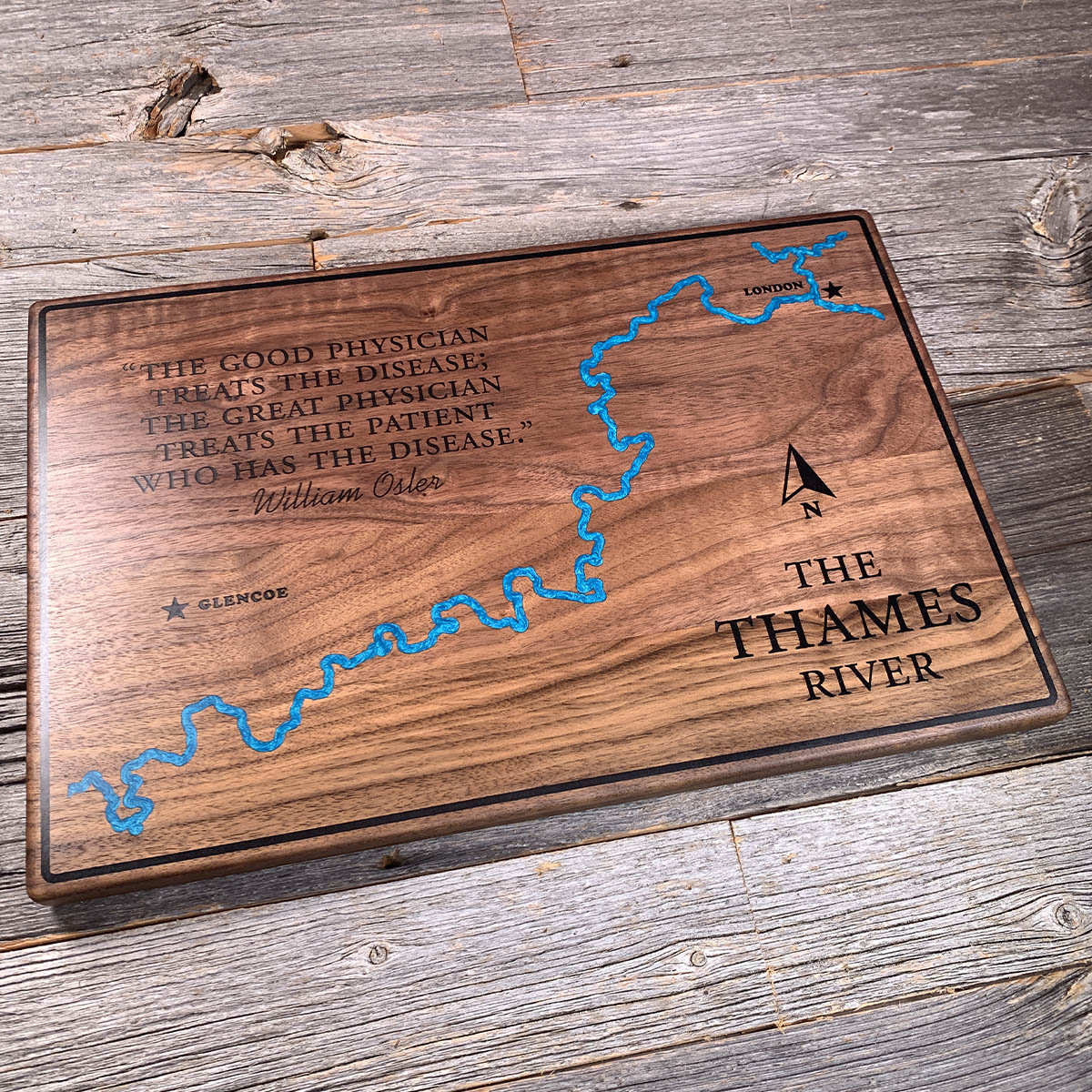
Thames River
London, Ontario, Canada
Also known as Deshkan Ziibi, London Ontario, Middlesex County
Frederick Banting woke at two in the morning on 31 October 1920, in a house on Adelaide Street in London, and wrote about twenty-five words.
He had come to London that summer, having missed out on a job in Toronto. He bought the house for $7,800, put his practice in the front room and used the pantry as an apothecary. Almost nobody came. He took teaching work at Western to fill the time.
The note was about diabetes, which was then fatal. He thought a substance could be taken from a dog's pancreas once the rest of the organ had been allowed to waste. He could not do the work in London and went back to Toronto in the spring.
By January 1922 insulin was being given to patients. Parks Canada calls the house the birthplace of the most important Canadian medical discovery of the century.
Details
- Feature
- River
- Build
- Epoxy
- Material
- Solid Walnut
- Colour
- Blue Green
- Size
- 10-1/2" x 16"
- Completed
- March 2025
How this one was made
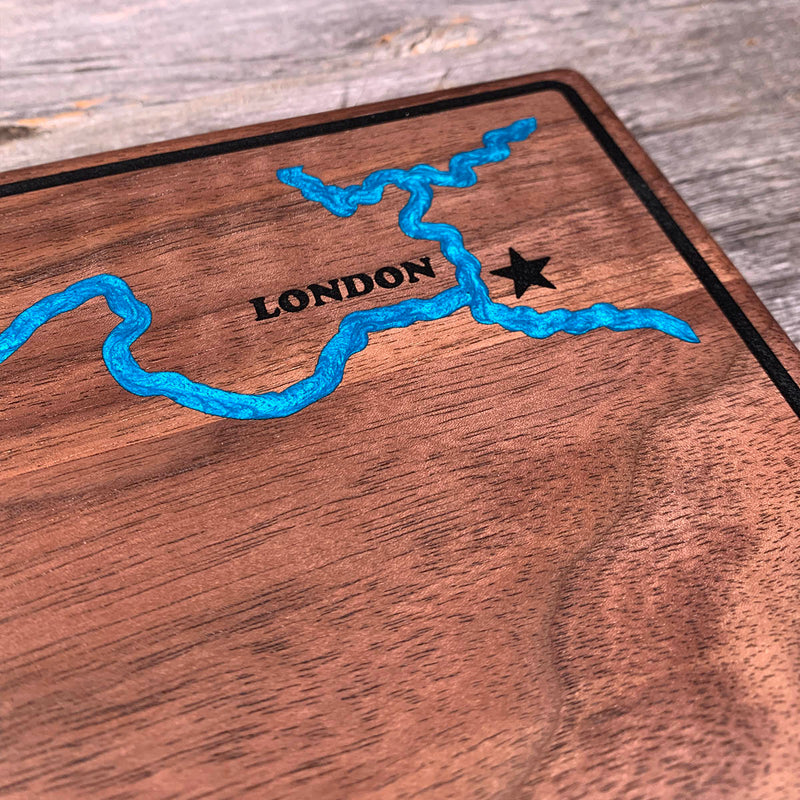
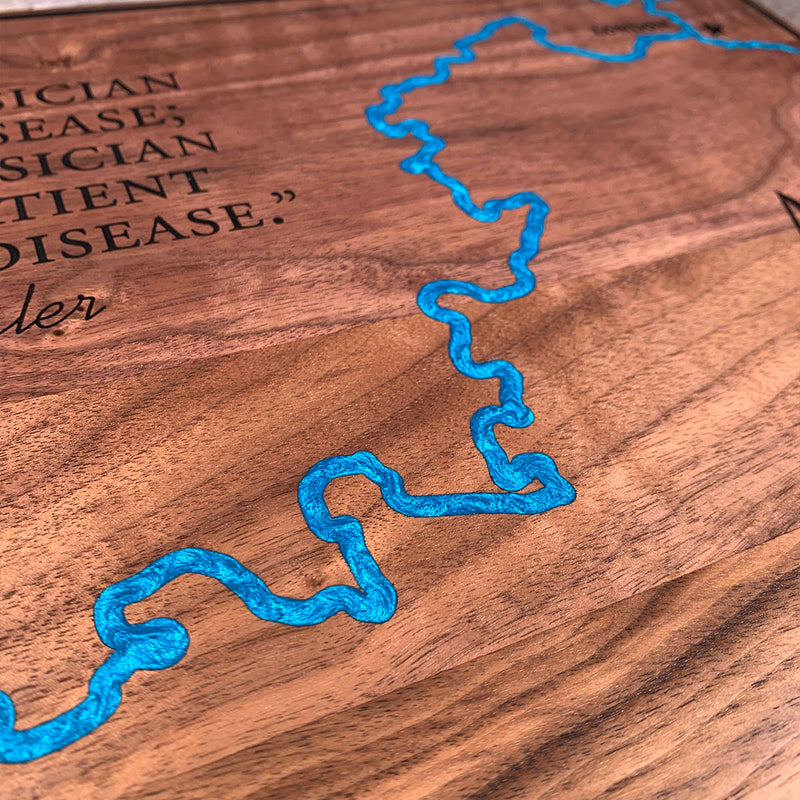
There is no open water on this board at all. The Thames is one continuous channel running corner to corner, never wider than the engraving, so the dam follows it at a half-inch offset on both sides the whole way and the flood is a long thin ribbon rather than a pour. A channel that narrow holds air with nowhere to send it, so most of the time went into working bubbles up out of the meanders. The border line, the type, the stars and the arrow are all separate sections in bare walnut.
Marked on this piece
- Glencoe
- London
Waypoints close by
 Great LakesOntario, Canada
 Kahshe LakeGravenhurst, Ontario, Canada
 Commanda LakeOntario, Canada
 Kawawaymog LakeNipissing District, Ontario, Canada
Also from our workshop
 Cascade
From
Cascade
From  Nomad
From
Nomad
From  Howl
From
Howl
From  Sanctuary
From
Sanctuary
From Where this is
42.9814775, -81.2581527