

Epoxy
Okanagan Lake
Vernon, British Columbia, Canada
Also known as Vernon, Kelowna, Penticton
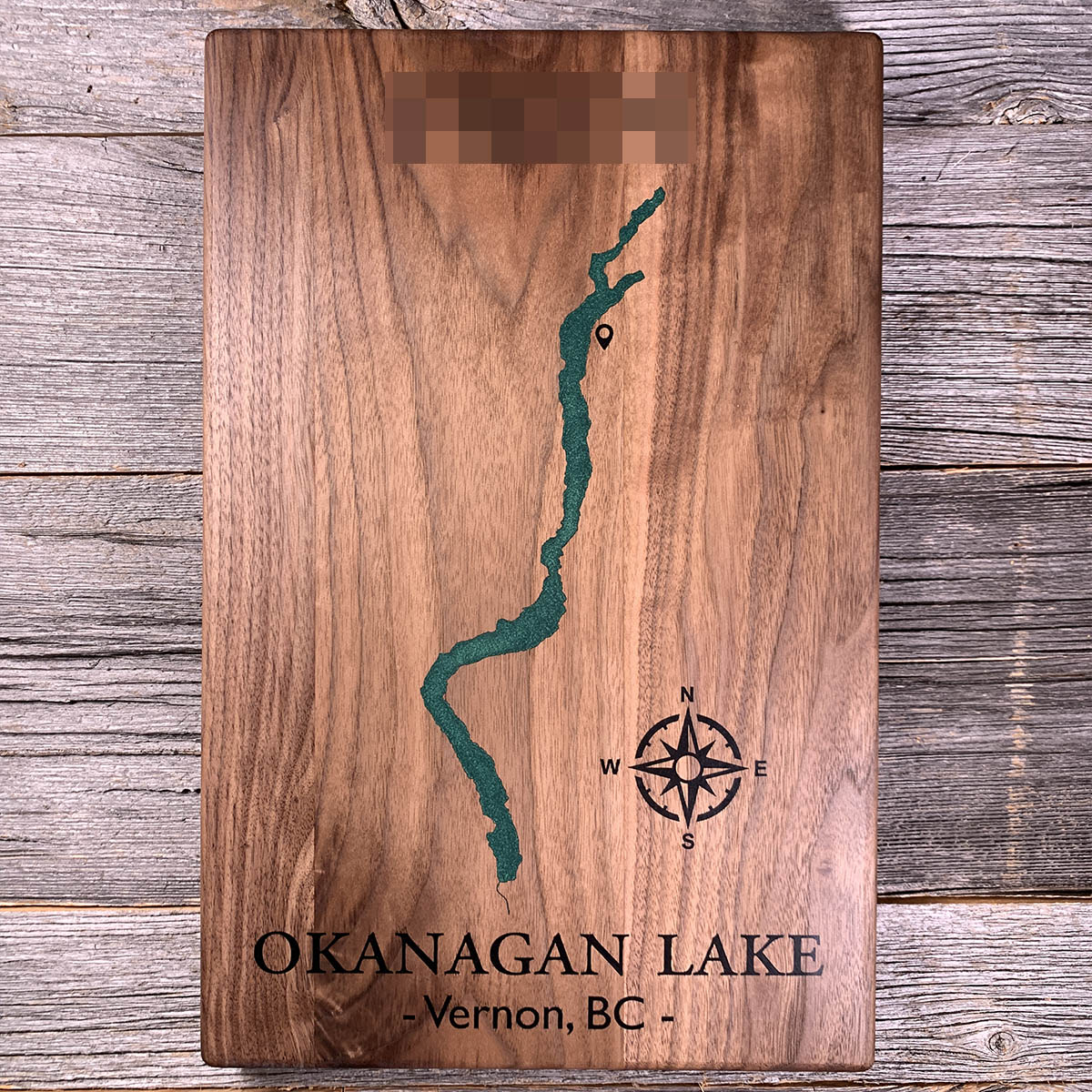
Okanagan Lake can be a hundred metres deep ten metres from shore. When Kelowna needed a bridge, the answer was to float one.
The lake is a fjord, cut by successive glaciations rather than filled by a river. It runs 135 kilometres, reaches 232 metres at its deepest, and holds enough water that it turns over only about once every 53 years.
The Okanagan Lake Bridge opened in 1958, the first floating bridge in Canada. Princess Margaret cut the ribbon. Tolls paid part of it off until 1963, and a lift span at the east end let sailboats through. It came out in 2008 and a second floating bridge took its place.
The lake has frozen over twice since records began, in the winters of 1906 and 1949. Nothing since, in a valley that gets a real winter.
Details
- Feature
- Lake
- Build
- Epoxy
- Material
- Solid Walnut
- Colour
- Forest Green
- Size
- 10-1/2" x 16"
- Completed
- March 2025
How this one was made
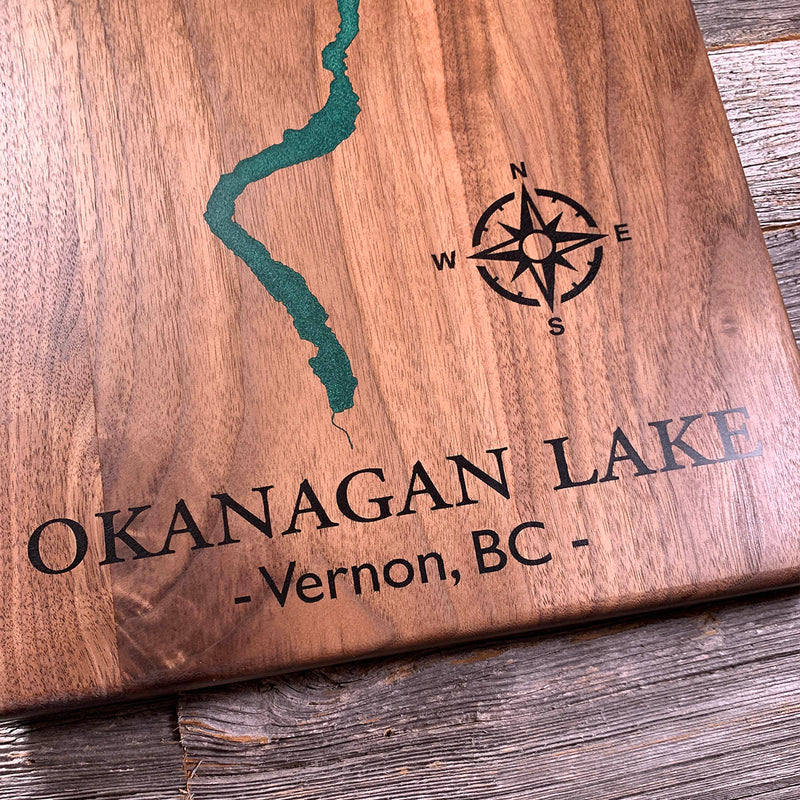
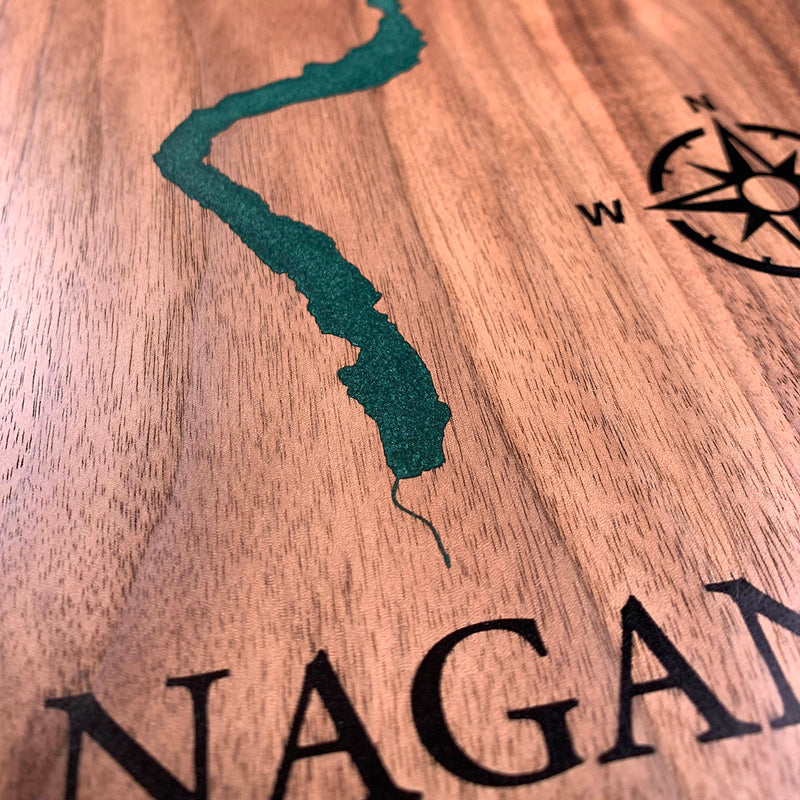
Green again, third time now, and on walnut it goes darker than it does on maple. Not wall to wall, so the dam follows the waterline about half an inch out and the flood runs the length of the shore. Okanagan is the longest thin thing we have poured, a hundred and thirty-five kilometres of lake squeezed into a ribbon on the board, with a shoreline that never straightens out and a river running off the bottom edge thinner than the engraving. The pin sits on its own out in the walnut and takes a dam of its own.
Waypoints close by
 Beaver LakeBritish Columbia, Canada
 Knouff LakeKamloops, British Columbia, Canada
 Kamloops LakeBritish Columbia, Canada
 Crawfish LakeRiverside, Washington, USA
Also from our workshop
 Moose Tracks
From
Moose Tracks
From  Howl
From
Howl
From  Kodiak
From
Kodiak
From  Nomad
From
Nomad
From Where this is
49.7816812, -119.682498