


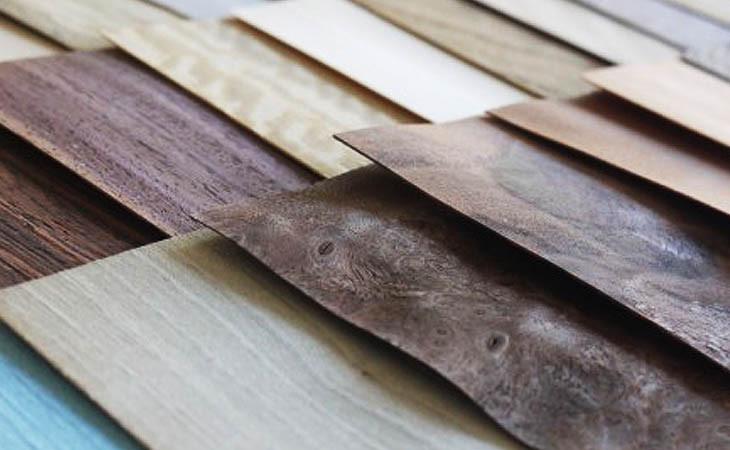
Wood veneer is a thin slice of real wood, cut from a log and bonded to a backing or core. It gives you the genuine grain, colour, and feel of natural wood in a form thin and stable enough to wrap around slim products like phone cases.
Is Wood Veneer Real Wood?
Yes. One of the questions we get most often is, "Are your cases made of real wood?" The answer is that we always use real wood veneer. Veneer is genuine wood, sliced thin from a real log, and it is a legitimate choice for a premium product rather than a shortcut. There are a few misconceptions about what counts as "real," so we will clear those up here. It helps to start with how veneer is actually made.
How Veneer is Made
Preparation
Once a tree has been selected and felled, the first step is debarking. A machine carefully scrapes all the bark from the log without damaging the wood underneath.
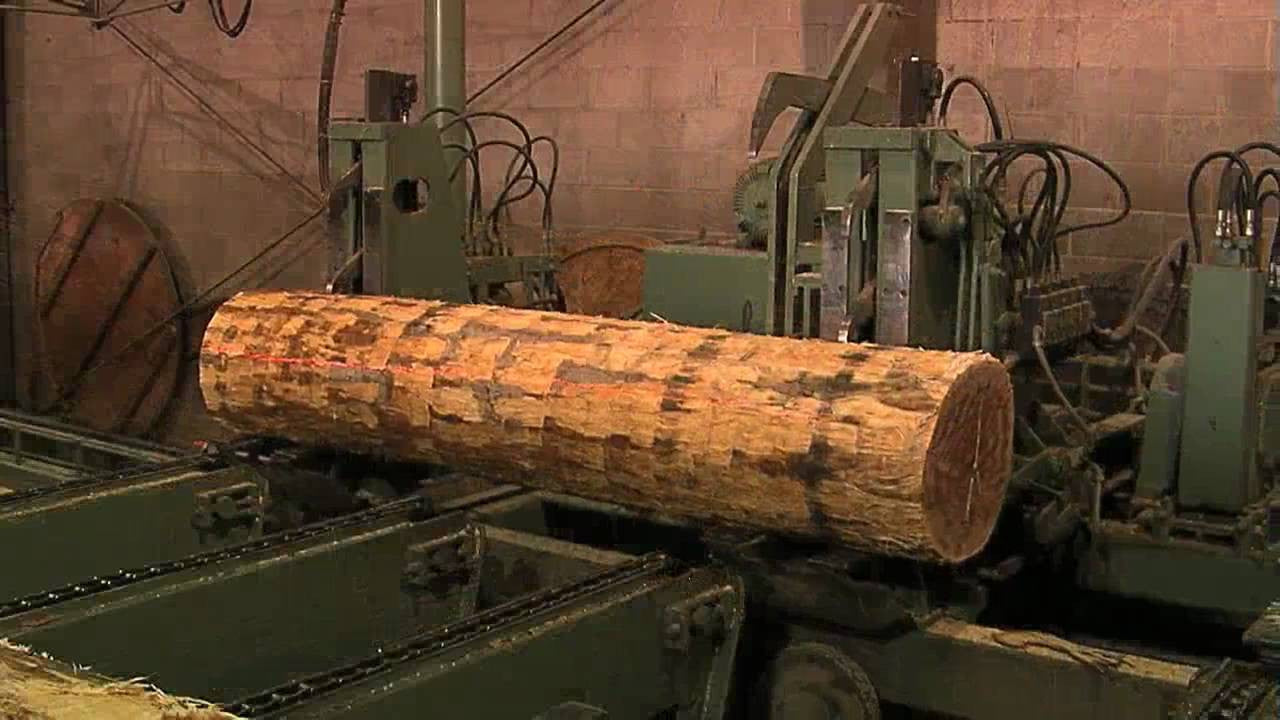
From there, the whole log is brought up to a high, consistent moisture content to soften it and prevent tearing when it is sliced. Steaming and soaking are the usual methods. Once it is ready, the log is cut to length for slicing, typically a little over 8 feet for a 4 × 8 sheet. Now it is ready to be cut into veneer.
Peeling
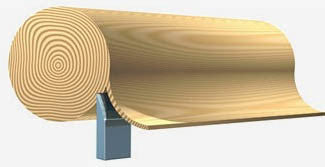
Rotary Cut veneer is made by loading the log into a veneer lathe, a large motorized machine that spins the log against a knife. Think of a giant apple peeler, taking off one thin, continuous slice as it turns.
The type we use, Quarter Cut, works differently. The log is loaded into a veneer slicer (picture a large deli-meat slicer) and run back and forth across the knife to produce thin slices.
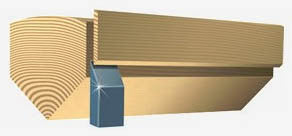
Both methods can produce the same thickness and quality of veneer, but the grain pattern differs between the two. We choose Quarter Cut for its clean, linear grain and the way it expands and contracts evenly with changes in its environment, which matters on something you carry and handle every day.
Drying
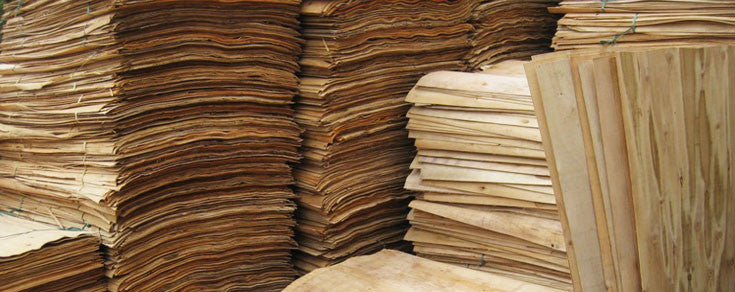
Once sliced, the veneer runs through a large dryer so it dries flat and even. From there, the sheets are stacked into bundles.
Clipping and Cutting
Those bundles are clipped to length and cut to consistent widths, ready for glue-up.
Gluing
Each trimmed sheet is run through a gluing machine that bonds them edge to edge into full 4 × 8 sheets. Ours is paper-backed veneer, so the sheets are then bonded to a thin layer of paper that improves their flexibility and stability. From there, the finished sheets are ready to come to Keyway and become cases.
Natural Veneer vs. Reconstituted Veneer
Veneer comes in several forms, but the distinction that matters most for a phone case is natural veneer versus reconstituted veneer. This is also where people are most often misled, so it is worth understanding the difference.
Natural Veneer
This is the real deal, and it is what we use. The sheet is made of the wood it is listed as, the colours are true to life, and the grain is genuine and beautiful. It usually costs a little more, and it is worth it.
Reconstituted Veneer
Reconstituted veneer is real wood too. The difference is that it is engineered to imitate another species rather than being the wood it appears to be. It is usually named after the wood it is designed to look like. Reconstituted Ebony, for example, is made to resemble ebony but is not actually ebony. The material is genuine wood; the issue is transparency, knowing what you are actually buying.
It is often made from pale, lightweight woods such as obeche, which can be pressed, formed, and dyed to look like a wide variety of species.
Reconstituted veneer has real advantages. It is consistent, easy to reproduce, and more affordable. For us, though, it lacks the authenticity and character of natural veneer, which is why we use the real thing whenever possible. If there is a colour of pattern that we can't achieve with natural veneer, recon veneer is not out of the question. It has it's place!
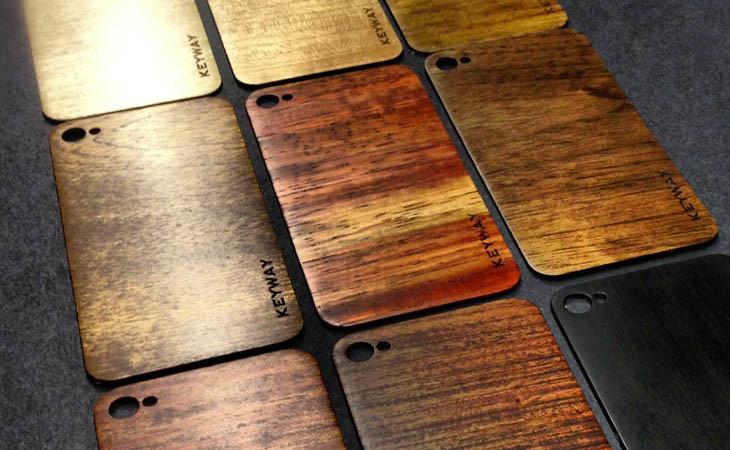
Below are two examples of reconstituted versus natural veneer. Reconstituted is on the left, natural is on the right.


Both types have their place. What matters is that you know which one you are buying.
Veneer vs. Solid Wood: Why We Use Veneer
A question we hear almost as often as "is it real wood?" is "why not use solid wood?" It is a fair question, and the honest answer is that veneer is not a budget substitute for solid wood. For a product like a phone case, it is the better choice.
Solid wood looks and feels fantastic, but it moves. As humidity and temperature change, a solid piece expands, contracts, and over time can cup, warp, or crack. On a thick cutting board that movement is harmless. On something as thin and precise as a phone case, where the fit around buttons, ports, and the camera has to stay exact, it becomes a problem.
Veneer solves this. By bonding a thin slice of real wood to a stable backing, you get the authentic grain and feel of the species with far less of the movement. The result is a case that stays slim, holds its shape, and keeps its fit. You also get the look of premium, figured woods on every single case, rather than being limited to whatever a solid block happens to reveal.
Solid wood still has its place for furniture and larger goods. For a slim, durable, dimensionally stable phone case, veneer wins, and that is why we use it.
Is Veneer Cheap or Fake?
Veneer has a bit of an image problem, and it comes from the furniture world. For decades, "veneer furniture" meant a cheap particleboard frame with a paper-thin printed finish glued on top. So when people hear "veneer," they often hear "fake."
Real wood veneer is not that. As we covered above, natural veneer is genuine wood, sliced from the same logs as solid lumber. The grain is real, the colour is real, and no two pieces are identical. The difference between natural veneer and the cheap printed stuff is the same difference we draw between natural and reconstituted veneer: one is the real species, the other is engineered to imitate it.
Durability comes down to the finish. We seal every wood case with two coats of semi-gloss post-catalyzed lacquer, a hard, professional-grade coating that cures to a tough film. It gives the wood solid protection against daily wear and tear, scratches, and skin oils, along with some resistance to water. It is still real wood underneath, so it is not indestructible, but it is built to live in a pocket and a hand every day.
Wood Veneer FAQ
Is veneer real wood?
Yes. Natural wood veneer is a thin slice of genuine wood taken from a real log, with the true grain and colour of the species. The only exception is reconstituted veneer, which is also real wood but is engineered to imitate a different species, and which we typically avoid in favour of natural veneer.
Is wood veneer durable?
Our wood cases are sealed with two coats of semi-gloss post-catalyzed lacquer, a hard, durable coating that protects against everyday wear, scratches, and skin oils. It is still real wood, so it can be marked under enough force, but for daily pocket-and-hand use it holds up well.
How thick is wood veneer?
Decorative wood veneer is thin by design. The veneer we use is about 1/32 inch (roughly 0.8 mm), which is what lets a wood case stay slim while still being genuine wood.
Is a wood veneer phone case waterproof?
No. The lacquer finish gives the wood some water resistance, but a veneer case is still real wood and should never be treated as waterproof. If it gets wet, wipe the water off right away. Water left sitting on the case can soak in over time.
Does wood veneer scratch easily?
The post-catalyzed lacquer finish is the first line of defense and resists everyday scuffs well. It is not as scratch-proof as a hard polycarbonate shell, but it stands up to normal daily use.
How do I take care of a wood case?
Not much is needed, and a little everyday care goes a long way. Because it is real wood, a case is happiest away from extremes, so avoid leaving it in direct sunlight or somewhere very hot for long stretches, and if it gets wet, simply wipe it dry. Treated like the natural material it is, a wood case will look great for years.
Veneer or solid wood, which is better for a phone case?
For a phone case, veneer. Solid wood moves with humidity and temperature and can warp or crack at the thin, precise dimensions a case requires. Veneer gives you the same real wood look and feel while staying slim and holding its fit.
For us, since we are a company that specializes in authentic, handmade wood products, we stick with natural veneers whenever possible. If you want to see how that veneer becomes a finished case, take a look at how our wood cases are made in the workshop, or read our honest buyer's guide to wood phone cases to see how the real-wood brands compare.


4 comments
James
From a millworker’s perspective, this article is very accurate; in nice commercial millwork projects, veneer is a great choice, and often the most premium option for an owner or architect’s design to be built. Veneer is often seen as “cheap” but it absolutely is not; it’s hard to work with and when done well, has an excellent finish.
Frank
Honestly, I’ve made it over 70 years without actually knowing just how veneer was created. This one page not only made it easily understandable, but, now, I can explain the various types of veneer to younger buddies and appear "knowledgeable: :) Thanks!!! This seriously is a well written and explained page.
Jackie Towne
Can’t wait to get my case
Conor Waters
I am so GLAD I have a Keyway phone case. I had a LifeProof case beforehand and there is nothing wrong with it. I’ve just been a fan of real wood phone cases and you guys delivered with amazing designs and reliability. Thank you so much!
Leave a comment
All comments are moderated before being published.
This site is protected by hCaptcha and the hCaptcha Privacy Policy and Terms of Service apply.