


Yellowstone has a way of catching first-time visitors off guard. You show up expecting the famous stuff. Old Faithful, the bison, maybe a grizzly if you're lucky. What you don't expect is how alive the whole place feels, how the ground is steaming and shifting and clearly still working on something, how a single afternoon can take you from a geyser basin to a thousand foot canyon to a high alpine lake without leaving the park. It was the first national park anywhere in the world, established in 1872, and more than 150 years later it still has the best variety of any park in the country. Here are eight reasons to put it on your list, plus a few Yellowstone facts worth knowing before you go.
1. How Big Is Yellowstone National Park?

Yellowstone is big in a way that's hard to plan around. Roughly 3,470 square miles (about 2.2 million acres) spread across three states: Wyoming, Montana, and Idaho. Larger than Rhode Island and Delaware combined. The Grand Loop Road forms a figure eight through the middle and takes a full day to drive without stopping, which nobody actually does. Plan on at least three days, ideally more. Most of the park sits above 7,500 feet, with peaks pushing past 11,000 feet in the Absaroka and Gallatin ranges, and more than 1,100 miles of trails run through territory the vast majority of visitors never see.
2. Geysers and Hot Springs

This is the part that makes Yellowstone Yellowstone. More than half the active geysers on Earth sit inside the park, along with over 10,000 hydrothermal features total. Old Faithful is the one everyone shows up for, erupting on a schedule that's predictable but not exactly punctual, often roughly every 60 to 110 minutes, with current predictions posted near the visitor area and in the NPS app. It's also just one of more than 500 active geysers in the park, which gives you a sense of how casually Yellowstone hands these things out.

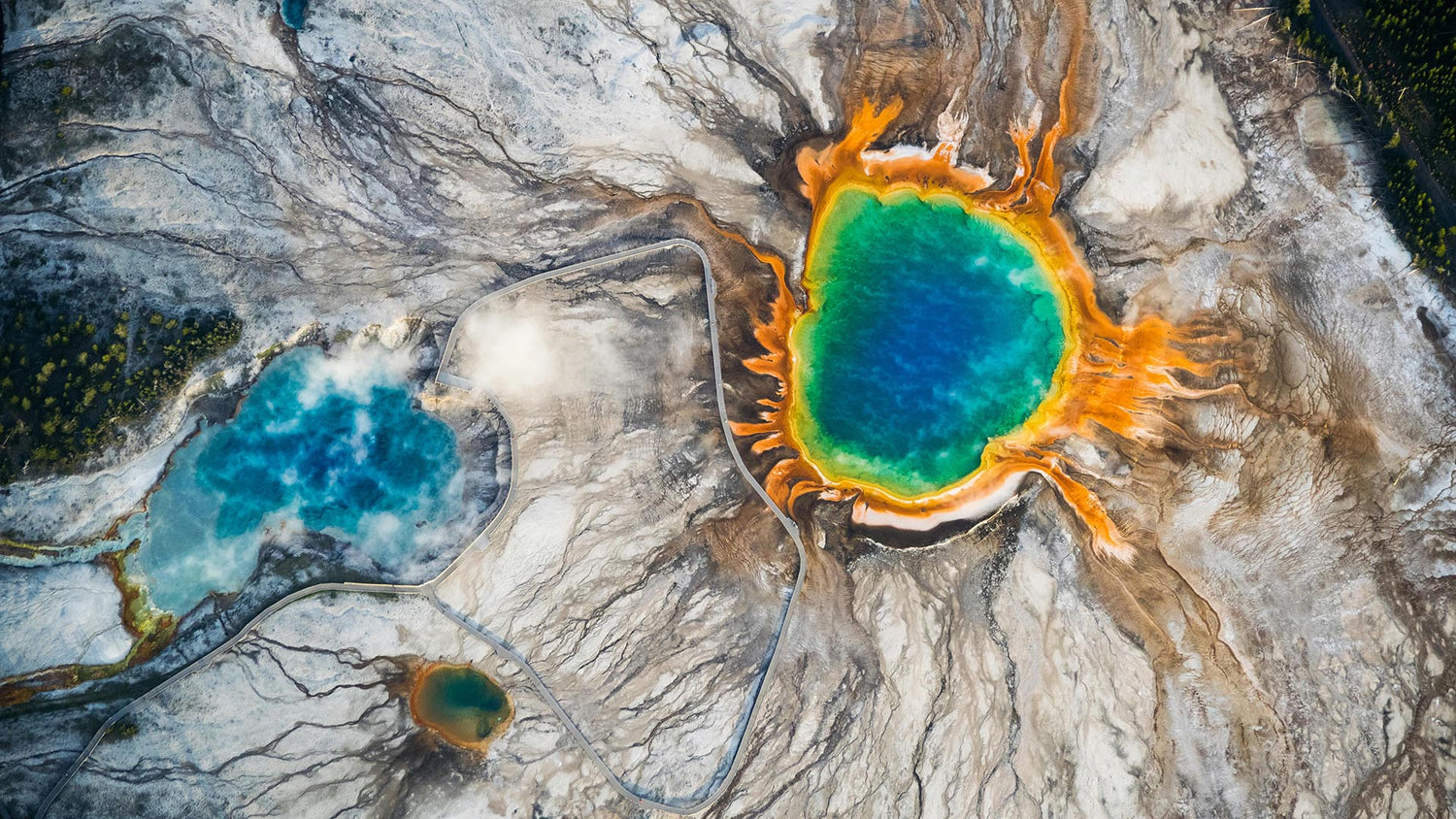
The hot springs are arguably more impressive. Grand Prismatic Spring is the largest in the country and runs through bands of blue, green, yellow, and deep orange. It's wider than a football field, and the best view is from the Fairy Falls overlook trail rather than the boardwalk at ground level. Mud pots, fumaroles, and the alien colors of the Norris and Mammoth basins fill out the rest of it. Walking these basins, you're a few feet above a volcanic system that's very much still working.
3. Wildlife

Yellowstone is the rare park where the wildlife competes with the scenery for your attention. The Lamar Valley, often called the Serengeti of North America, is where you go if you want a real shot at wolves, bears, elk, and bison in one place. Get there at dawn, find a pullout, and watch. The bison herd alone is worth the trip. It's the largest free-roaming wild herd in the United States and the only continuously free-ranging population in the lower 48 since prehistoric times.
The rest of the cast runs deep too. Moose, pronghorn (the fastest land animal in North America), bighorn sheep, mountain lions, river otters, bald eagles, trumpeter swans. The unofficial rule is to slow down whenever you spot a cluster of cars and spotting scopes pulled off on the shoulder. Something is almost always out there.
4. Yellowstone Lake

Yellowstone Lake doesn't get the attention it deserves. Sitting at 7,733 feet, it's the largest high-elevation lake above 7,000 feet in North America, with more than 140 miles of shoreline, most of it only reachable by boat or on foot. The water stays cold enough year round that swimming is a brief commitment even in August. Native cutthroat trout live in it. The Lake Yellowstone Hotel, opened in 1891, still operates on the north shore and is one of the more classic stays in the park system.
The interesting part is what's underneath. The lake bed is part of the Yellowstone caldera, with hydrothermal vents on the floor releasing heat and gas the same way the geysers do on land. Paddling parts of the lake, where permitted, is one of the quieter ways to experience a landscape that's still under construction.
5. Forests

About 80 percent of the park is forested, and most of that is lodgepole pine. These trees are built for fire. Many of them have serotinous cones that only open after intense heat, which is how the forest comes back so fast after a burn. The 1988 fires took out more than a third of Yellowstone, and the landscape since has become a kind of timeline you can read while you drive, young lodgepoles filling in around the silver ghosts of older stands.
Higher up, the forest shifts to Douglas fir, Engelmann spruce, and whitebark pine, whose seeds are a major late-summer food source for grizzlies. The Bechler region in the southwest corner is one of the better places in the park to walk for hours without seeing another person.
6. Canyons and Waterfalls

The Grand Canyon of the Yellowstone runs about 20 miles long, drops up to 1,200 feet deep, and is painted in yellows, oranges, and reds where hydrothermal activity has altered the rhyolite walls. Two waterfalls anchor it, including the Lower Falls at 308 feet, nearly twice the height of Niagara. Artist Point on the south rim and Lookout Point on the north are the two views you've probably seen on a calendar at some point, and they hold up in person.
The park is full of smaller waterfalls that would be the main attraction anywhere else. Tower Fall, Gibbon Falls, Undine Falls, and Mystic Falls all pay off on short hikes. The Bechler region in the southwest corner is sometimes called Cascade Corner and has more waterfalls per square mile than anywhere else in the park, though you have to work harder to get there.
7. Hiking

No park has a more varied trail system than Yellowstone. Over 1,100 miles of it, running through geyser basins, lakeshores, alpine ridgelines, and backcountry valleys that haven't changed much since the first explorers came through in the 1800s. Day hikers can pick an easy boardwalk loop in one of the basins, a moderate climb up Mount Washburn or Bunsen Peak, or a full day push into something more remote. Backpackers willing to pull a permit can spend a week without crossing a road. Plenty of parks have great hiking. Yellowstone is one of the few where the trail itself sits on top of a story bigger than the trail.
8. The First National Park

Yellowstone was set aside on March 1, 1872, the first national park anywhere in the world and the model the rest were eventually built on. Standing on the boardwalks at Old Faithful, or watching the Lamar Valley fill with bison at dawn, you're looking at a landscape that's been protected for more than 150 years, back when the idea of preserving wild country for its own sake was genuinely new. Every other U.S. national park traces part of its lineage back to the decision made here. That's part of what makes Yellowstone feel different from anywhere else. You're not just visiting a beautiful place. You're visiting the place that started the whole idea.
Take the Wild With You
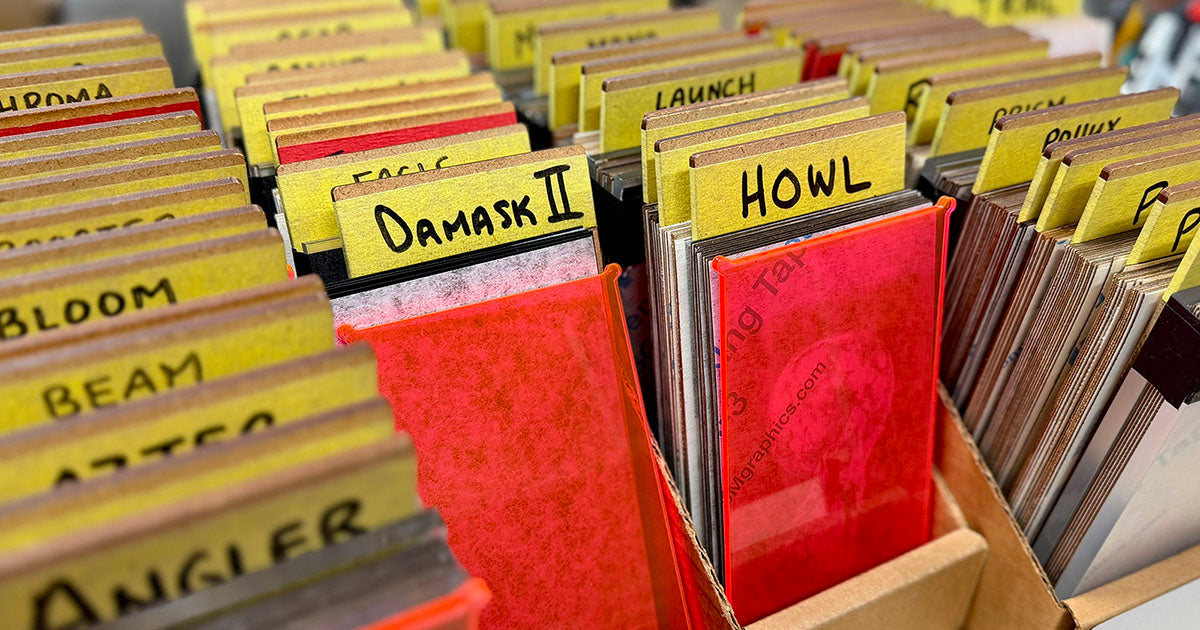
The animals are the part of Yellowstone that stay with people long after they leave, and they happen to be what a good chunk of our cases are built around. Out of our Mississauga shop we have been cutting and printing real wood, leather, and resin into phone cases since 2012, and the wood line reads like a roll call from this article: Howl for the lone wolf, Kodiak for the bear, and Moose Tracks for the moose. There are wolf packs and a few more of the regulars waiting in the wooden phone cases collection.
More taken with the hike than the wildlife? Hiker and Nomad trade the animals for trails, pine stands, and a campfire at dusk. And if you would rather carry something that exists exactly once, every One & Only case is poured and cut by hand and stamped with its own number, so yours ends up the only one of its kind anywhere. Have a look and pick the one that matches your sort of wild.

Leave a comment
All comments are moderated before being published.
This site is protected by hCaptcha and the hCaptcha Privacy Policy and Terms of Service apply.